

What is SEO? Your Friendly Guide to Getting Found Online
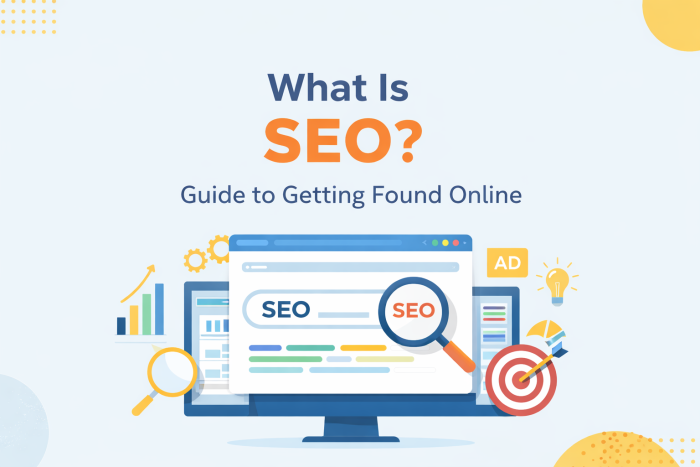
What is SEO? Simply put, SEO (Search Engine Optimization) is the practice of improving your website so more people can find it when they search on Google, Bing, or other search engines. Think of it like putting up a bright, clear sign on a busy street instead of hiding your shop in a dark alley. The better your SEO, the easier it is for potential customers to discover you online.
Here’s the thing: every day, people type millions of questions into search engines. “Best SEO expert in Dubai.” “How to improve brand visibility.” “Affordable web designers.” If your website shows up near the top of those results, you win. If it’s buried on page five? You might as well be invisible.
How Search Engines Work: The Basics You Need to Know
Before we dive deeper into what SEO is, let’s talk about how search engines work.
Search engines like Google use automated programs called “crawlers” or “spiders” that constantly scan the internet. These crawlers hop from one webpage to another, following links and collecting information about every page they visit. They’re looking at your content, your images, your page speed, and hundreds of other factors.
Once they’ve gathered this information, search engines organize it in a massive index—like a library catalogue, but for the entire internet. When someone searches for something, the search engine quickly sorts through this index to find the most relevant, helpful results.
The magic happens in the ranking process. Search engines use complex algorithms to decide which pages deserve the top spots. They’re asking: “Which page will best answer this person’s question?” Pages that earn those top positions get the most clicks, the most visitors, and ultimately, the most business.
Why Should You Care About SEO?
Let me give you a real-world example. Imagine you run a digital marketing agency. If someone in your area searches for SEO in Dubai, wouldn’t you want your website to appear first? That’s free advertising reaching people who are actively looking for exactly what you offer.
Here’s what good SEO can do for you:
- Drive more qualified traffic to your website (people who actually want what you’re selling)
- Build credibility and trust (top-ranking sites are often seen as more authoritative)
- Improve user experience (many SEO practices also make your site faster and easier to use)
- Generate long-term results (unlike paid ads that stop when you stop paying)
The beauty of SEO is that it works while you sleep. Once your pages start ranking well, they can continue bringing in visitors month after month.
Understanding SEO Keywords: The Foundation of Search
At the heart of SEO are keywords—the words and phrases people type into search engines. Understanding SEO keyword is crucial because they connect what people are searching for with the content you provide.
Let’s break this down with an example. If you sell handmade candles, your potential customers might search for “soy candles,” “natural home fragrance,” or “eco-friendly candles.” These are your keywords. Your job is to naturally include these terms throughout your website content, product descriptions, and blog posts.
But here’s the catch: you can’t just stuff keywords everywhere. Search engines are smart enough to detect this trickery, and they’ll actually penalize you for it. Instead, focus on creating genuinely helpful content that naturally incorporates the words your audience uses.
Think about questions people ask related to your keywords. “What are the benefits of soy candles?” “How long do natural candles burn?” Answer these questions thoroughly, and you’ll naturally use relevant keywords while providing real value
The Three Pillars of SEO Success
On-Page SEO: What You Control on Your Website
This includes everything visible on your actual web pages. Your headlines (those H2 and H3 headers you’re reading right now), your content quality, your images, and even your page titles and descriptions all matter.
Write clear, descriptive headlines that tell both readers and search engines what your page is about. Use short paragraphs (like these) because they’re easier to read on screens. Include images with descriptive file names and alt text. Make sure your pages load quickly—nobody waits around for slow websites anymore.
Off-Page SEO: Your Website's Reputation
This is largely about backlinks when other websites link to yours. Search engines see these links as votes of confidence. If reputable sites think your content is worth linking to, you must be providing value.
Building quality backlinks takes time. You might write guest posts for industry blogs, create shareable infographics, or simply produce content so good that people naturally want to reference it. Quality matters far more than quantity here.
Technical SEO: The Behind-the-Scenes Stuff
This covers your website’s technical foundation. Is your site mobile-friendly? (It better be—most people browse on phones now.) Does it use HTTPS for security? Is your site structure logical, making it easy for crawlers to navigate?
You don’t need to be a programmer to handle basic technical SEO, but these elements significantly impact how search engines view your site.
Common SEO Mistakes to Avoid
The biggest mistake? Treating SEO as a one-time project. It’s an ongoing process. Search engines constantly update their algorithms, competitors improve their sites, and user behaviour evolves. What worked last year might not work today.
Another mistake is focusing solely on search engines and forgetting about humans. Yes, you want to rank well, but ultimately, real people need to find your content helpful. Write for humans first, optimize for search engines second.
Your Next Steps
Start small. Pick one page on your website and optimize it properly. Research what people are searching for in your niche. Write genuinely helpful content that answers their questions. Make sure your page loads fast and looks good on mobile devices.
SEO isn’t rocket science, but it does require patience and consistency. You won’t rank #1 overnight, but with steady effort, you’ll see progress. Track your results, learn from what works, and keep refining your approach.
Remember: at its core, what is SEO really about? It’s about making your website the best possible answer to someone’s question. Do that consistently, and the rankings will follow.