

On-Page vs Off-Page vs Technical SEO: What’s the Real Difference?
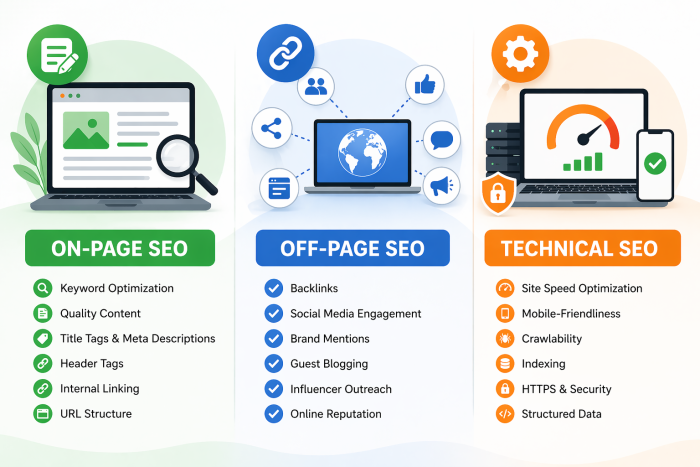
If you’re trying to improve your website’s visibility, you’ve probably come across the terms on-page SEO, off-page SEO, and technical SEO. They may sound similar, but they play very different roles.
In simple terms, on-page vs off-page vs technical SEO explain what you optimise on your website, what happens outside your website, and how well your website performs behind the scenes. Understanding all three helps you build a strong and balanced SEO strategy.
Many businesses work with professional SEO agency services because focusing on just one area rarely delivers long-term results. SEO works best when everything is aligned.
What Is On-Page SEO?
On-page SEO refers to everything you optimise directly on your website pages. It’s the part you have full control over.
This includes:
- Content quality
- Keyword usage
- Headings and structure
- Meta tags
- Internal linking
- Image optimisation
Why On-Page SEO Matters
Search engines need clear signals to understand your content. On-page SEO helps them identify what your page is about and when to show it in search results.
Using keyword variations like on-page SEO optimisation, SEO page optimisation, or your main keyword for on-page, off-page, or technical SEO naturally across the content makes your page more relevant.
Key Elements of On-Page SEO
Content Optimisation
Your content should solve real problems. Keep it clear, simple, and useful.
Keyword Placement
Use keywords naturally in headings and paragraphs. Avoid forcing them.
Meta Tags
Your page title and description are often the first things users see. A strong meta title for on-page SEO can improve clicks and visibility.
Internal Linking
Linking to relevant pages helps users explore your website and improves SEO structure.
What Is Off-Page SEO?
Off-page SEO focuses on everything happening outside your website that impacts your rankings.
It is mainly about building trust and authority.
Why Off-Page SEO Matters
Search engines look at how other websites interact with your site. If trusted websites link to you, your credibility increases.
Key Elements of Off-Page SEO
Backlinks
Backlinks are one of the strongest ranking signals. High-quality SEO backlinks tell search engines your content is valuable.
Brand Mentions
Even without links, mentions of your business online can build credibility.
Social Media Presence
Sharing content increases visibility and brings traffic.
Guest Blogging
Publishing content on other websites helps you reach new audiences and gain authority.
What Is Technical SEO?
Technical SEO focuses on how your website performs and functions behind the scenes.
It ensures that search engines can properly access and understand your website.
Why Technical SEO Matters
Even if your content is excellent, poor technical performance can stop your website from ranking.
A slow, broken, or hard-to-navigate website creates a poor experience for both users and search engines.
Key Elements of Technical SEO
Website Speed:
Faster websites improve user experience and rankings.
Mobile-Friendliness:
Your website should work smoothly across all devices.
Crawlability and Indexing:
Search engines must be able to access and index your pages correctly.
Site Structure:
A clean and organised structure helps search engines understand your content hierarchy.
Error Fixing:
Broken links, duplicate content, and missing tags can negatively affect SEO.
On-Page vs Off-Page vs Technical SEO: How They Differ
To keep it simple:
- On-page SEO focuses on your content and page elements
- Off-page SEO focuses on your website’s reputation and authority
- Technical SEO focuses on your website’s performance and structure
Each one supports the other. Ignoring even one can slow down your growth.
How They Work Together
Think of SEO as a complete system rather than separate parts.
- On-page SEO helps search engines understand your content.
- Off-page SEO builds trust around your website.
- Technical SEO ensures everything runs smoothly.
For example, you might have great content, but if your site is slow, users will leave. Or you may have strong backlinks, but if your content is weak, rankings won’t improve.
That’s why all three need to work together.
Common Mistakes to Avoid
Many businesses make the mistake of focusing only on one type of SEO.
Here are a few things to watch out for:
- Ignoring technical issues that affect performance
- Overusing keywords instead of writing naturally
- Building low-quality backlinks
- Not updating content regularly
SEO is not a one-time task. It requires ongoing effort and consistency.
Where Should You Start?
If you’re just beginning, try this approach for a stronger foundation.
Start with technical SEO to make sure your website works properly. Then focus on on-page SEO by creating useful and clear content. Finally, build off-page SEO through backlinks and visibility
Final Thoughts
Understanding on-page, off-page, and technical SEO makes it easier to plan your SEO strategy with clarity.
Instead of treating SEO as separate tasks, think of it as a connected system where each part supports the other. When done right, it helps your website rank better, attract the right audience, and grow steadily over time.