

Social Media Marketing Funnel: From Awareness to Conversion
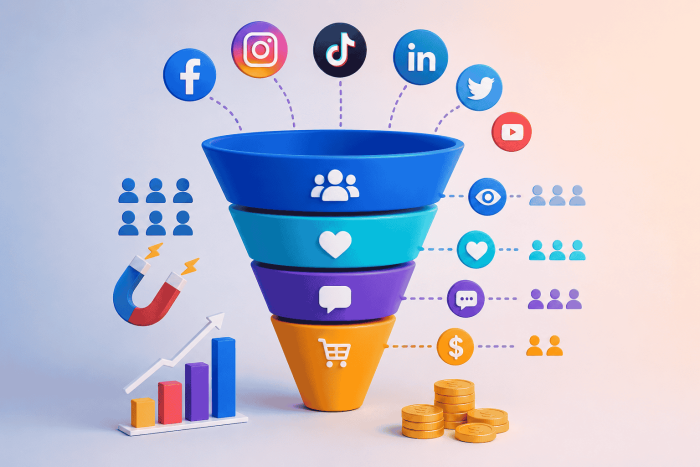
Social media can do far more than increase likes and followers. When approached strategically, it can guide people from discovering a brand for the first time to becoming paying customers. That journey is often referred to as the social media marketing funnel.
Businesses that understand how each stage works are better equipped to create campaigns that deliver real results. Whether you are building brand awareness or focusing on sales, creating social media content that converts starts with understanding how people move through the funnel.
What Is a Social Media Marketing Funnel?
A social media marketing funnel is a framework that maps the customer journey across different stages. It helps businesses understand how users interact with their content and what actions they are likely to take next.
Rather than expecting every post to generate immediate sales, the funnel focuses on gradually building trust and moving potential customers closer to a purchase decision.
Although the number of stages can vary, most social media funnels include:
- Awareness
- Consideration
- Conversion
- Loyalty and advocacy
Each stage requires different types of content and different objectives.
Why Does a Social Media Funnel Matter?
Many brands focus heavily on posting content without considering where their audience is in the buying journey. A structured funnel helps businesses:
- Reach new audiences more effectively
- Build trust over time
- Improve lead quality
- Increase conversion rates
- Retain existing customers
Without a funnel, social media activity often becomes disconnected, making it harder to measure performance and return on investment.
1. Awareness Stage: Introducing Your Brand
At the top of the funnel, the objective is visibility. People may not know your brand, product, or service, so the focus should be on attracting attention rather than selling.
Types of Content for the Awareness Stage
1. Educational Posts
Simple tips, how-to videos, and industry insights help establish credibility.
2. Short Videos and Reels
Short-form content tends to generate higher reach and engagement, especially on platforms such as Instagram, TikTok, and LinkedIn.
3. Trending Topics and Conversations
Participating in relevant discussions can increase brand exposure and help businesses stay visible.
4. User-Generated Content
Customer stories and testimonials create authenticity and encourage trust.
Metrics to Monitor
- Reach
- Impressions
- Engagement rate
- Video views
- Follower growth
At this stage, success is measured by visibility rather than immediate sales.
2. Consideration Stage: Building Trust
Once people become familiar with your brand, they move into the consideration stage. Here, they start comparing options and evaluating whether your products or services meet their needs.
Content That Supports Consideration
1. Case Studies
Show how your solutions have helped existing customers.
2. Product Demonstrations
Videos and walkthroughs help potential buyers understand what you offer.
3. Behind-the-Scenes Content
Sharing company culture, processes, and team stories makes brands feel more human.
4. Educational Resources
Guides, webinars, and downloadable materials provide additional value.
Businesses that focus on creating social media content that converts often invest heavily in this stage because trust plays a significant role in purchase decisions.
Metrics to Monitor
- Website visits
- Saves and shares
- Comments
- Time spent on content
- Lead generation
3. Conversion Stage: Turning Interest into Action
At the bottom of the funnel, the goal shifts from engagement to action. Users already know your brand and are closer to making a decision.
Content Designed for Conversion
1. Customer Testimonials
Reviews and success stories reduce hesitation.
2. Limited-Time Offers
Promotions and exclusive discounts encourage immediate action.
3. Product-Focused Videos
Clear demonstrations help answer final questions before purchase.
4. Strong Calls to Action
Users should know exactly what to do next, whether it is booking a consultation, purchasing a product, or signing up for a service.
Understanding the click-through rate in social media can provide valuable insight into how effectively your campaigns drive users towards the next step. High click-through rates often indicate that the messaging and calls to action are aligned with audience intent.
Metrics to Measure
- Click-through rate
- Conversion rate
- Cost per lead
- Website enquiries
- Sales revenue
4. Loyalty and Advocacy Stage: Keeping Customers Engaged
The customer journey does not end after a sale. Retaining customers is often more cost-effective than acquiring new ones.
Strategies to Build Loyalty
1. Community Building
Create spaces where customers can engage with your brand and each other.
2. Exclusive Content
Reward existing customers with early access, special offers, or premium resources.
3. Customer Spotlights
Featuring customers strengthens relationships and encourages advocacy.
4. Ongoing Engagement
Responding to comments, messages, and feedback helps maintain trust.
Satisfied customers frequently become brand ambassadors who recommend products and services to others.
Choosing the Right Platforms for Each Stage
Different social media platforms serve different purposes throughout the funnel.
Ideal for B2B awareness, lead generation, and thought leadership.
Suitable for storytelling, product discovery, and community engagement.
Effective for retargeting campaigns and customer relationship building.
TikTok
Useful for increasing reach and introducing brands to younger audiences.
YouTube
Strong for educational content, tutorials, and product demonstrations.
Selecting platforms based on audience behaviour often produces better results than trying to maintain a presence everywhere.
Common Mistakes Businesses Make
Focusing Only on Sales
Not every post should be promotional. Audiences need value before they are ready to buy.
Ignoring Analytics
Data reveals which stages of the funnel need improvement.
Inconsistent Messaging
Brand voice and messaging should remain consistent throughout the customer journey.
Overlooking Existing Customers
Retention and loyalty can generate long-term revenue and referrals.
Building an Effective Social Media Funnel
A successful social media strategy recognises that customers do not move from awareness to purchase instantly. Every stage serves a purpose, and each requires different content, objectives, and metrics.
Businesses that align their content with audience intent are more likely to generate sustainable growth. Whether the objective is to increase visibility, generate leads, or improve sales, understanding the customer journey helps create more meaningful interactions. Partnering with a trusted social media marketing company in Abu Dhabi can also help businesses develop data-driven campaigns that support every stage of the funnel and deliver measurable results.